
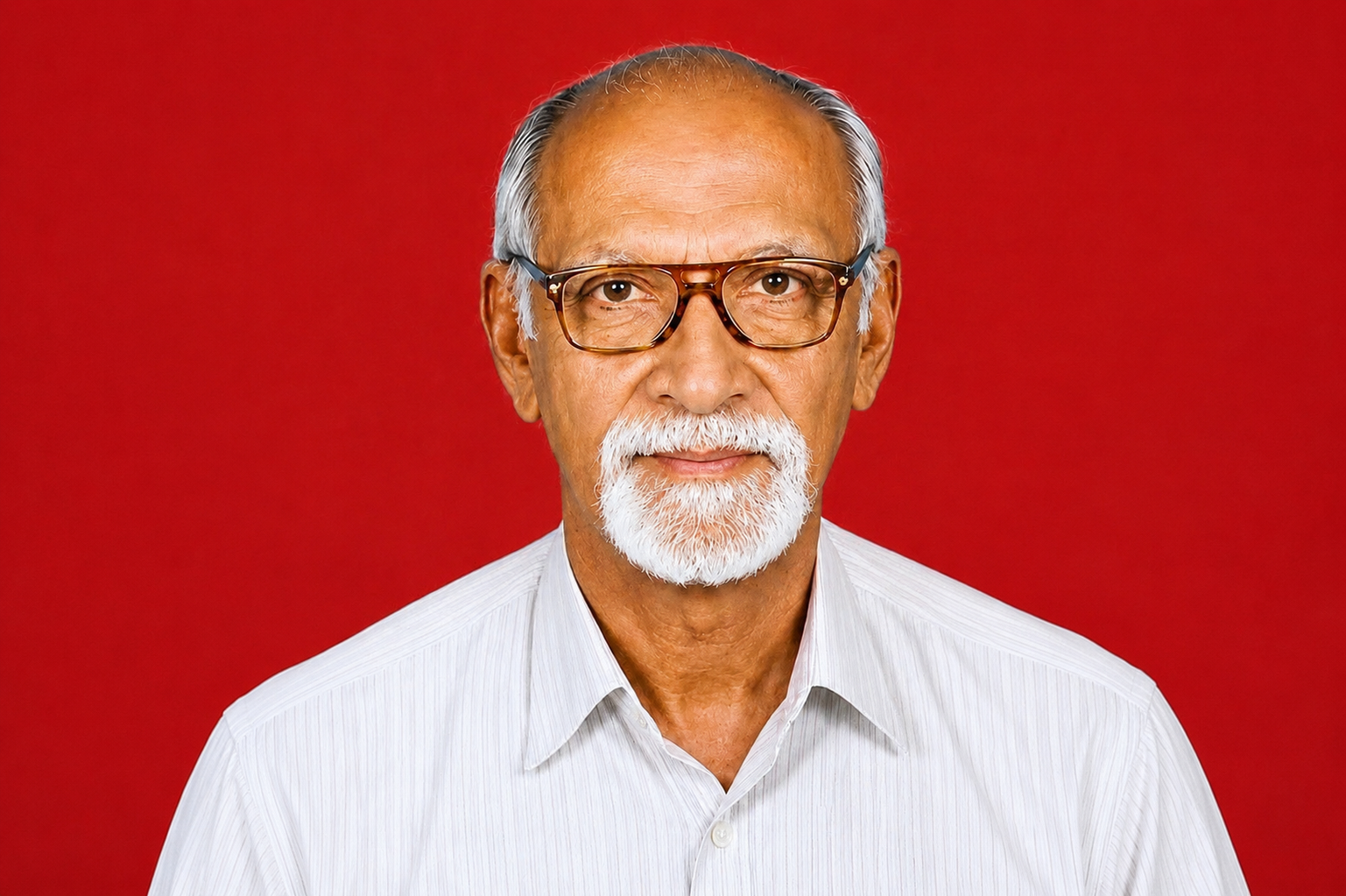
A Remembrance of Prof. Dr. M.A. Ittyachan
He never raised his voice. That’s what stays with us. Even when an entire department’s faculty gheraoed him in his office for hours, furious over something as absurd as who would get the landline telephone, M.A. Ittyachan simply sat there. No anger. No defensiveness. Just this maddening, disarming silence. Eventually, the protestors ran out of steam. They had come to fight a man, and found instead a kind of human weather system, impossible to argue with, impossible to move.
I spent more than three decades beside this man, and I still don’t know how he did it.
We met long before Mahatma Gandhi University existed, back when Kerala’s academic life was still taking shape. Ittyachan was teaching physics at the University of Kerala’s Karyavattom campus, doubling as a hostel warden. Even then, he’d earned a reputation that set him apart – the students actually liked him. This was the early 1980s. Academic authorities weren’t supposed to be liked. But Ittyachan listened to students. He treated them as people rather than problems to be managed.
When MGU was born in 1983, we were scattered across the district—a small band of academics each trying to build something from nothing. Ittyachan was coaxing the Department of Materials Science into existence from temporary shelters at SB College, Changanasseri. We were part of setting up the Department of International Relations at CMS College, Kottayam. Prof. K.M.Zachariah had Gandhian Studies at Baselios College. V.N. Rajasekaran Pillai was running Polymer Chemistry at St. Thomas, Pala. We were building a university in pieces, department by department, college by college.
Here’s how friendship actually formed, in accumulated hours. Every Friday evening, Ittyachan would board the Venad Express at Changanasseri. I’d step into the same carriage at Kottayam. And for the next few hours, as the train moved to the capital, we’d talk. About everything. Academic politics. Family troubles. The future of the university. The small humiliations and occasional triumphs of academic life.
Later, we ended up living under the same roof at ‘Geethanjali,’ a rented teachers’ hostel near Ettumanoor. This is when I discovered that the distinguished professor, the man whose formal title preceded him like a herald, was remarkably ordinary in the best sense. He had no airs. No need for deference. We’d share simple meals and argue about policy until midnight, and he’d never once pull rank.
When the UGC pay scale dispute erupted, in 1990-91, Ittyachan became President of the MGU Teachers’ Association. I was Secretary. Our styles could not have been more different. I was aggressive. Impatient. Ready to burn bridges if it meant winning an argument. Ittyachan was water to my fire.
During negotiations with the administration, I’d be hammering the table, making demands, pushing confrontation to its edge. He’d sit there, completely still, radiating this infuriating calm that somehow made everything I said land harder. He wasn’t passive, he was strategic. His composure gave weight to our position in ways my fury never could.
The worst came when Vice Chancellor U.R. Ananthamurthy, the legendary writer himself, visited Cheruvandoor campus. Out of collective grievance, we decided to boycott his meeting. URA, who felt things deeply, took it as personal betrayal. At the next gathering, he shouted at us. Accused us of bad faith. The relationship between the faculty and the administration was fracturing. Something had to give. It was Ittyachan who guided my hand. Under his counsel, I wrote a letter explaining that boycotting wasn’t betrayal—it was the legitimate exercise of protest rights. The wound healed. The bridge held. That was Ittyachan’s gift – he understood that most conflicts are won through patience and the right words at the right moment.
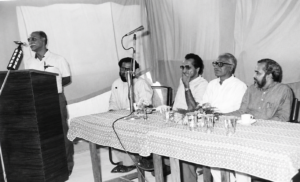
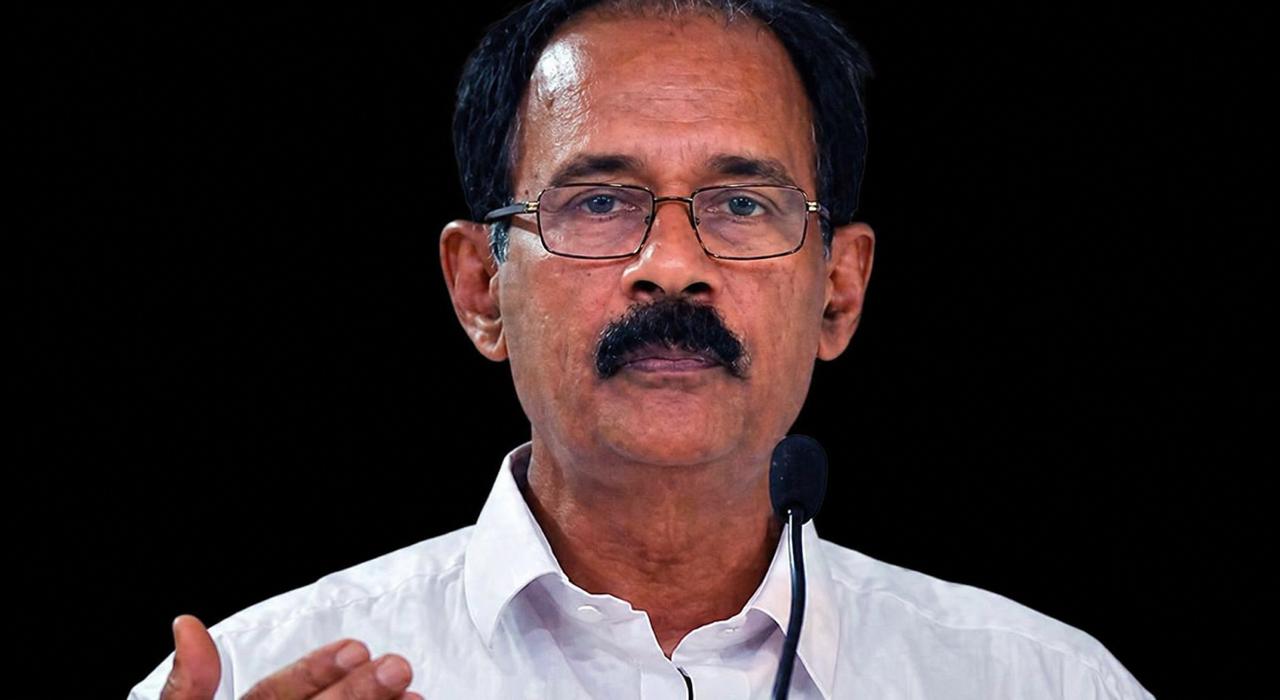
Prof Ittyachan speaks in a function at IR with UR Ananthamurthy, CV Cheryan, VN Rajasekaran Pillai and Anthony Chirappanath
But don’t mistake his calm for timidity.
When the push to privatise education gained momentum—when self-financing courses threatened to reshape everything we’d built—Ittyachan didn’t retreat into his seniority. He didn’t issue statements from a safe distance. He put on a black mask with us. We walked through the streets of Kottayam in absolute silence, shoulder to shoulder with lecturers half his age. The image stays with me. This distinguished physicist, this future Acting Vice Chancellor, marching like any ordinary protestor. No special treatment. No protected position. Just a man who believed something was worth fighting for.
Academic life has its petty battles. The telephone incident remains with us. When all the departments were crammed onto the Cheruvandoor campus, resources were thin. Someone had to decide who got the landline. My entire department—International Relations, the group w’d built—surrounded Ittyachan in his office and refused to leave. Hours passed.
Anyone else would have cracked. Would have shouted back. Would have made threats or concessions just to end the siege. Ittyachan simply waited. He didn’t argue. Didn’t plead. Didn’t even seem particularly bothered. Eventually, we exhausted ourselves against his stillness. You can’t sustain rage against someone who refuses to meet it.
The Later Years
Seniority brought him to the university’s apex. When Vice Chancellors travelled, Ittyachan stepped in, Acting VC with the kind of natural authority that doesn’t announce itself. There were court battles over institutional rank, bitter disputes with colleagues. He weathered them. His position was vindicated. Even after MGU, he kept going. CUSAT brought him on as Visiting Professor, and he continued mentoring researchers well into what should have been his retirement.
Toward the end, he grew nostalgic. He wanted to write the institutional history—the real story of the School of Pure and Applied Physics, of MGU itself. He started posting fragments on social media – memories, anecdotes, pieces of a larger narrative he never finished assembling. Those fragments are still out there. Someone should gather them. In those scattered posts lies the DNA of an institution—the strikes, the struggles, the strange fellowship of people who built something from almost nothing.
What Remains
Prof M.A. Ittyachan was a physicist, a union leader, an administrator, and an activist. He was also, improbably, a man entirely without pretence. I keep returning to those train rides. Friday evenings. The Venad Express rattling south. Ittyachan at the window, watching the landscape pass, completely at ease with himself and the world.
That’s how I remember him. Not the titles or the positions or the battles won through patience. Just a man on a train, heading home, ready to talk about everything and nothing until the stations ran out. He was the calm at the centre. And now that centre is gone.
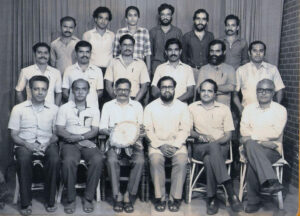
Prof Ittyachan and his colleagues giving farewell to PVC Prof Koshy

A fitting tribute to a great teacher, leader and human being. Thank you, Prof Seethi.
Thanks Ajith 🙏
Dear Professor Seethi,
This is a magnificent tribute to my father, and our entire family is deeply grateful to you for writing it. You have beautifully chronicled not just his career, but his spirit—the rare ability to remain the “calm at the center” no matter how turbulent the environment.
Hearing about your shared struggles, from the MGU Teachers’ Association days to marching shoulder-to-shoulder in protest, reminds us of the incredible history you built together from scratch. Your suggestion to gather his scattered social media reflections on MGU’s history is incredibly thoughtful, and it is something we would love to see happen. Thank you for being such a wonderful friend to him and for honoring his memory so beautifully.
Thanks 🙏
കൊവിഡ് കാലത്ത് അദ്ദേഹം സ്വന്തമായി ചിത്രം വരയ്കുവാൻ പഠിച്ച് ഫെയ്സ് ബുക്കിൽ പടങ്ങൾ എല്ലാ ആഴ്ചയും ഇട്ടിരുന്നു ….