First published in Eurasia Review, 21 July 2025
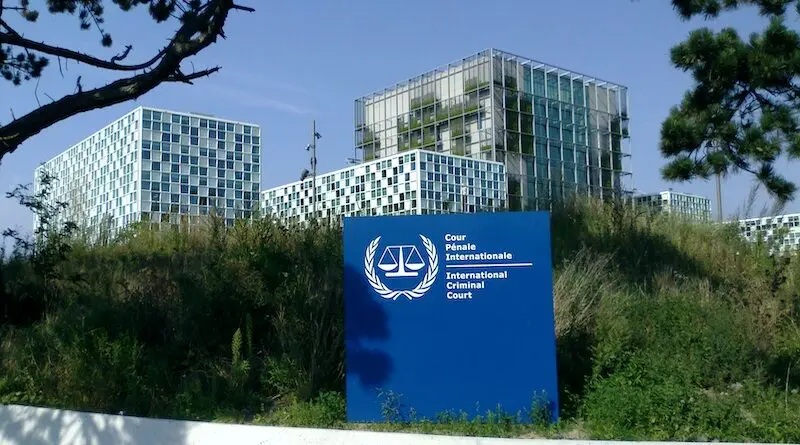
On two separate fronts last week, the struggle over international justice revealed the deep contradictions of our times. In the United States, a federal judge blocked the enforcement of an executive order by President Donald Trump that had targeted individuals working with the International Criminal Court (ICC) for investigating U.S. or allied personnel. Judge Nancy Torresen ruled that the order violated the constitutional right to free speech, thereby protecting the rights of two human rights advocates who challenged the decree. Meanwhile, in The Hague, the ICC dismissed Israel’s plea to cancel arrest warrants issued against Prime Minister Benjamin Netanyahu and former Defense Minister Yoav Gallant, confirming that the investigation into alleged war crimes in Gaza would proceed.
These parallel rulings highlight both the promise and the limitations of international justice in a divided world. One judgment defends the freedom to cooperate with an international institution; the other reinforces the ICC’s commitment to pursue accountability—even against powerful state leaders. Yet these decisions also reveal a bitter truth: the international justice system is upheld and opposed by the same nations that claim to champion the rule of law.
The Rise and Struggles of the ICC
Founded in 2002 through the adoption of the Rome Statute, the International Criminal Court (ICC) was envisaged as a permanent and impartial institution dedicated to holding individuals accountable for the most severe international crimes—namely genocide, crimes against humanity, war crimes, and aggression. Its core ambition was to ensure that even the most powerful would not be immune to justice when national systems failed to act.
Currently, 125 countries are Parties to the Rome Statute, spanning most of Europe, Latin America, Africa, and parts of Asia-Pacific. Africa alone accounts for 33 members. However, the absence of several major world powers from this list is not by chance—it reflects deeper geopolitical calculations and scepticism toward the Court’s authority.
Who’s In, Who’s Out—and Why
A number of influential nations have deliberately chosen not to join the ICC or have withdrawn their participation. Countries like the United States, Russia, China, India, Israel, and Indonesia have remained outside its jurisdiction—either due to concerns about sovereignty, potential legal exposure, or political motivations. This undermines the ICC’s claim to universality and weakens its global enforcement capacity.
The United States initially signed the Rome Statute during President Clinton’s administration but later withdrew under President George W. Bush in 2002. U.S. officials have consistently voiced apprehensions about exposing American personnel to ICC investigations, particularly those related to military actions abroad. These concerns intensified during the Trump era, which saw sanctions imposed on ICC officials pursuing such probes.
Russia endorsed the Rome Statute in 2000 but formally withdrew its support in 2016, shortly after the ICC characterized its annexation of Crimea as an act of occupation. Moscow dismissed the Court as biased and ineffective. Tensions escalated in 2023 when the ICC issued an arrest warrant for President Vladimir Putin over alleged war crimes in Ukraine—a move Russia rejected, arguing it infringed on national sovereignty and demonstrated political bias.
China has consistently declined to sign the Rome Statute, citing objections to foreign legal bodies exerting influence over its domestic affairs. While it agrees in principle with punishing crimes like genocide, Beijing remains wary of how international courts might be leveraged against its internal policies in regions such as Xinjiang, Hong Kong, and Tibet. Officials also critique the perceived imbalance of power favouring Western nations within international bodies like the UN Security Council.
India has neither signed nor ratified the Rome Statute. Its primary objections include: (1) the Court’s power to act without state consent, (2) the inclusion of the crime of aggression without a clear definition at the time, and (3) the exclusion of terrorism and nuclear weapons from ICC jurisdiction. India is particularly concerned that external interventions could politicise internal conflicts in Kashmir, the Northeast, and elsewhere. It also opposes the role of the UN Security Council in referring cases—given the lack of representation for countries like India. New Delhi has opted for a cautious stance: observing the ICC’s operations from the sidelines, without fully engaging.
Israel signed the Rome Statute in 2000 but withdrew in 2002 after the Court began examining alleged crimes committed in the occupied Palestinian territories. Israeli objections centre on Article 8(2)(b)(viii), which criminalises the transfer of population into occupied territory—a clause that could be used to prosecute Israel’s settlement policy in the West Bank. The issuance of arrest warrants for Prime Minister Netanyahu and former Defense Minister Yoav Gallant in 2024 further deepened Israel’s hostility to the Court. Israel, like the U.S., argues that its domestic legal system is capable of addressing war crimes and that ICC jurisdiction over non-member states is politically motivated.
Indonesia, the world’s largest Muslim-majority country and third-largest democracy has also stayed outside the Rome Statute. Although it has expressed rhetorical support for international justice, Indonesia has cited concerns about sovereignty and potential misuse of the ICC’s prosecutorial powers.
A Court with Uneven Reach?
Due to the inconsistent participation of nations, the ICC operates within a fragmented legal setting. It can only investigate crimes committed by individuals from member states, or those that occur within a member state’s territory—unless the UN Security Council refers the case. However, veto powers within the Council often shield influential allies, leading critics to accuse the Court of applying justice selectively.
Moreover, several countries in the Global South such as in Africa that once supported the ICC have reconsidered their commitment. In 2016–17, South Africa, Burundi, and Gambia initiated withdrawal procedures amid claims that the Court unfairly targeted African leaders. While Burundi completed its withdrawal, South Africa and Gambia eventually reversed course. Nevertheless, these episodes exposed the fragility of ICC legitimacy in regions where it was once embraced.
Despite these crises, the ICC has secured notable convictions—such as Congolese warlords Thomas Lubanga and Germain Katanga—and continues to investigate atrocities in Ukraine, Palestine, Sudan, Myanmar, and Venezuela. But the political cost of indicting powerful leaders is high, and enforcement remains dependent on national cooperation. The problem is not just who the ICC prosecutes—but who it cannot.
As long as the most militarily and politically powerful states remain outside its jurisdiction, the dream of universal accountability will remain elusive. In its current form, the ICC functions less like a court for all, and more like a tribunal constrained by geopolitics. The absence of China, the U.S., India, Russia, and Israel from its structure weakens its authority and narrows its reach. This is not a failure of principle, but of political will.
Justice for Whom?
The reluctance of major powers to embrace the ICC reveals a deeper issue: international justice is often viewed as justice imposed on others. As Ruben Carranza notes, the Court’s focus on the Global South reinforces a sense of impunity for the powerful. African leaders have long accused the ICC of bias, with most early indictments targeting their region. Even when justified, the pattern of selective prosecution has damaged the Court’s credibility.
For many victims in places like South Sudan, Myanmar, Gaza, or Ukraine, the ICC represents hope—but a distant and often unfulfilled one. Arrest warrants rarely lead to action, and states frequently refuse to cooperate. Justice remains symbolic, and too often, unreachable.
Why the Global South Distrusts the ICC
The Global South’s circumspection is not always rejectionist. It reflects distrust toward an international legal system shaped by Western norms. Institutions like the UN Security Council, IMF, and WTO already reinforce structural inequality; the ICC is seen as part of that environment. Many believe justice must go beyond trials to include truth-telling, reparations, and reform. Experiences from South Africa and Colombia show that restorative justice may offer more lasting healing than prosecution alone.
Crisis and an Opportunity
The ICC today is more assertive, yet more contested than ever. While issuing warrants for leaders like Netanyahu and Putin demonstrates resolve, the lack of enforcement exposes its weakness. Multipolarity, led by rising powers like India and Brazil, could reform the system, or erode it further. The challenge is to prevent new centres of power from replicating old patterns of impunity. Reclaiming legitimacy requires reform. The ICC must reflect broader representation and legal diversity. It must expand its vision to include economic and environmental injustices and enforce rulings with consistency. Above all, it needs a moral reset, and no justice system can survive if it shields the powerful and punishes the weak. In a world where power too often overrides principle, the survival of justice depends not only on institutions, but on whether the world still believes justice is worth fighting for.