
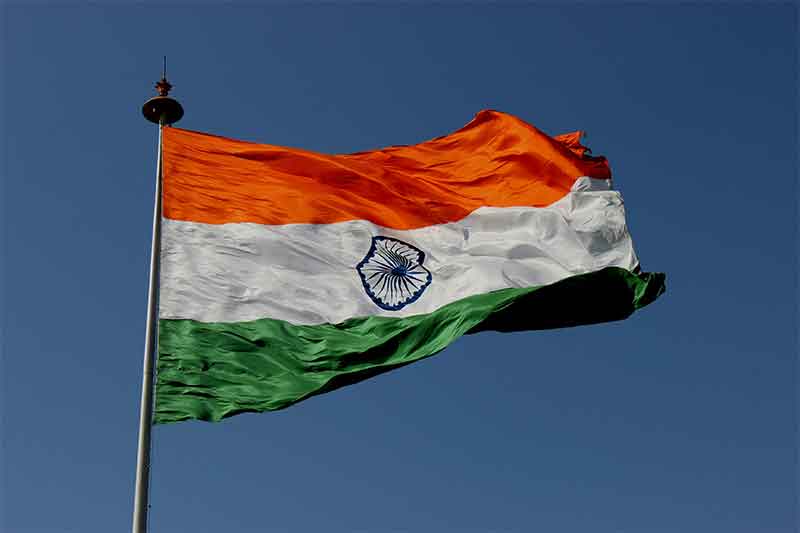
India’s freedom was not handed down—it was wrested from the grip of empire through long drawn-out resistance, sacrifice, and defiance. It was never just about driving out foreign rulers. It was about reclaiming the right to decide who we are, how we live, and what future we choose—for ourselves. Political independence was only the surface. Beneath it lay a deeper demand: economic self-direction, social dignity, and the power to stand tall without bending to anyone’s will. Words like sovereignty, autonomy, and justice weren’t abstract ideals—they were the very foundations of the national promise.
But that promise is under siege. The chains of colonialism may be broken, but new forms of control have taken their place—slicker, subtler and far more insidious. Today, power does not always come with armies or flags. It comes disguised as trade agreements, investment flows, and diplomatic partnerships. It comes through the boardrooms of global corporations and the offices of international financial institutions. India may no longer be ruled, but it is still being steered—by forces beyond its borders, beyond its vote, beyond its people. The question is no longer whether we are free—but whether that freedom still means anything at all.
One of the clearest examples of this turn came during Donald Trump’s presidency in the United States. His government took actions that openly affected India’s economy and foreign policy choices. A 50% tariff on Indian exports was imposed as punishment for India’s continued energy purchases from Russia. This was not just about trade—it was a way to pressure India into changing its international alignments. Products like rice, seafood, and industrial goods were pushed out of the U.S. market. Indian exporters lost billions. At the same time, Trump publicly criticised India’s trade policies, calling it the “king of tariffs” and warning of more penalties if it did not comply with U.S. preferences.
Even more troubling was the broader political message. Trump’s government built closer ties with Pakistan, even as Pakistani leaders made openly hostile remarks against India, including nuclear threats. The U.S. administration chose not to condemn such statements, and instead welcomed Pakistan’s military leadership in Washington. This created the impression that India’s concerns were being ignored, while its rival was gaining favour. These actions weakened trust and narrowed India’s space to respond diplomatically.
All of this raised a bigger issue: how much freedom does India really have in shaping its policies? The United States claimed to be a partner, but often acted unilaterally. And India, despite its size and growth, found itself reacting to decisions made elsewhere.
This is not only about the U.S. India has long been part of the global capitalist system. It is linked to global supply chains, financial markets, and trade rules. These systems are not neutral. They are shaped by the interests of the most powerful countries and corporations. When India tries to pursue its own development model—whether by supporting local industry or buying oil from countries like Russia—it often comes under pressure. In such a system, sovereignty can become an illusion.
This is what the economist Samir Amin warned about. He argued that the global capitalist system limits the space for real independence. According to Amin, developing countries are often trapped in structures that serve the interests of wealthier nations. Trade, debt, investment, and even aid are tools that can be used to control. The question then arises: Is true autonomy possible within this system? Or is the idea of national sovereignty, in the age of globalisation, more of a myth?
India’s foreign policy has often tried to balance different powers. During the Cold War, it avoided choosing sides and focused on non-alignment. In the modern era, it has built ties with many global actors, including the U.S., Russia, China, and others. This balancing act was seen as smart diplomacy. But recent events show that this approach has limits. When one partner becomes unpredictable, like Trump’s America, India’s options become restricted.
This shows the problem of over-dependence on any single power. India must avoid placing all its bets on one alliance. Strengthening partnerships across Asia, Africa, and Latin America can give it more choices. Building closer ties with the Global South, based on mutual benefit and respect, could offer an alternative to dependence on the West or China.
But global engagement alone is not enough. Real independence also depends on domestic strength. If India wants to resist external pressure, it must reduce its reliance on foreign capital, technology, and markets. This means investing in homegrown industries, improving infrastructure, and securing energy supplies. Programmes like “Make in India” aim to do this, but their success remains uncertain. The government must prove that it is serious about building long-term capacity, rather than just attracting short-term foreign investment.
India also needs to reform how it handles trade and technology. Critical areas like semiconductors, defense manufacturing, and clean energy must become priorities. The COVID-19 pandemic showed how global supply chains can be disrupted at any time. A self-sufficient economy is not about closing doors—it is about being able to stand on your own during crises.
At the international level, India must take the lead in changing global institutions. Groups like the World Trade Organisation (WTO), International Monetary Fund (IMF), and United Nations (UN) were meant to ensure fairness. But they are often dominated by major powers. India should push for reforms that give developing countries a stronger voice. It should work with other emerging economies to create systems that protect against unfair trade practices, economic sanctions, and political bullying.
India’s role in forums like the G20, BRICS, and the Shanghai Cooperation Organisation (SCO) can be used to raise these issues. It can also help build alternative institutions that reflect a more balanced world. But to lead, India must lead by example. Its foreign policy must reflect consistency, objectivity, and a commitment to peaceful coexistence. Returning to its founding values—non-alignment, equality, respect for sovereignty, and adherence to international law—can help rebuild global trust.
This does not mean going back to the past. It means applying those values to new realities. The world today is more interconnected, but also more divided. Nationalism is rising, especially Far-Right varieties. Rules are often ignored. Alliances are shifting. In such a world, India must combine moral leadership with smart strategy.The Trump era is just one example of how unpredictable global politics can become. But it also serves as a warning. India cannot rely on goodwill alone. It must build systems—both internal and external—that protect its independence, not just in theory, but in practice.
More importantly, India must ask tough questions. How independent is a country that depends on global supply chains for its goods, foreign investment for its economy, and imported weapons for its defense? How sovereign can it be if international financial institutions can dictate its policies, or if foreign tech companies dominate its digital space?
These are not just policy questions. They go to the heart of what independence really means today. As Samir Amin asked: Is it possible to break away from a global system that is built to benefit a few at the expense of many? That question remains open. But it is a question India must keep asking.
In sum, the idea of sovereignty in a globalised capitalist world is full of contradictions. India, like many others, claims independence. But in practice, its choices are often influenced, limited, or redirected by external forces. The Trump presidency made these tensions clear, but the issue runs deeper. As global power swings, India must rethink what autonomy means—and how to defend it.
To move forward, India must build strength at home, act wisely abroad, and lead the way in pushing for a fairer world order. Sovereignty cannot be gifted. It must be defended—economically, politically, and morally. Only then can the promise of independence truly be fulfilled.
Published in Countercurrents.org