“Our mission is to speak the truth to power. We send home that first rough draft of history, and some of us pay the ultimate price.” – Marie Colvin
Published in Countercurrents, 11 August 2025
In war and conflict zones, journalists risk their lives to tell the truth. Yet more than ever, they are being killed not because they are caught in the crossfire, but because they dare to report what is happening. The latest Israeli airstrike in Gazaon August 10, 2025, which killed five Al Jazeera journalists, is a grim reminder of how far those in power will go to silence independent voices. In Gaza today, reporting the truth has become a death sentence. The rights and protections that journalists are supposed to enjoy under international law are being ignored or deliberately violated, and the world’s response remains uneven, muted, or deeply politicised.
The Gaza Killings and the Challenge of Reporting
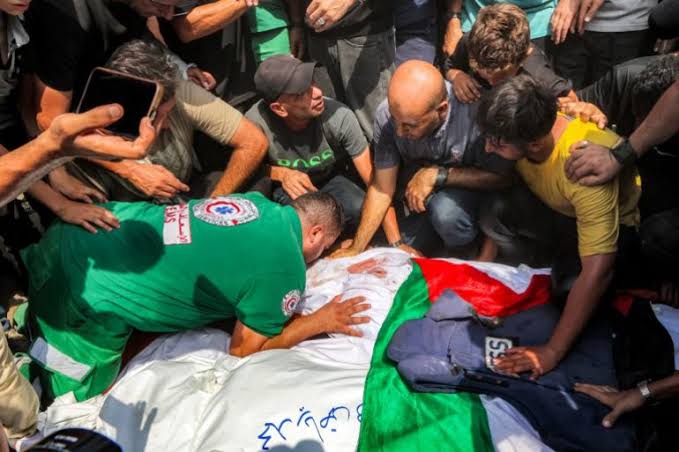
The August 10 strike near Al-Shifa Hospital in Gaza City killed correspondent Anas al-Sharif, journalist Mohammed Qreiqeh, and cameramen Ibrahim Zaher, Moamen Aliwa, and Mohammed Noufal. They were working in a press tent, covering the ongoing conflict. According to hospital sources, at least seven people died and eight were injured in the attack.Israel claimed that al-Sharif was a Hamas operative leading a militant cell. Al Jazeera, the Committee to Protect Journalists (CPJ), and other press advocacy organisations strongly rejected the accusation, calling the strike a targeted killing intended to silence coverage.
Al Jazeera condemned the incident as a “desperate attempt to silence the voices exposing the impending seizure and occupation of Gaza,” holding Israel fully responsible and calling for urgent international action. The killings came just hours after Prime Minister Benjamin Netanyahu announced he would allow some foreign journalists into Gaza for the first time since the war began—an invitation many now view as overshadowed by an implied warning: report critically and you may not leave alive.
The dangers are compounded by the wider humanitarian crisis. Palestinians are being killed while queueing for food near UN aid trucks, with residents describing famine, destruction, and indiscriminate slaughter. In such conditions, the journalists who remain are often the only link between Gaza and the outside world, yet they are systematically targeted.
Gaza and Other Killing Fields for the Press
The Gaza conflict is the deadliest media war ever recorded. Between October 2023 and August 2025, CPJ confirmed the deaths of 186 journalists and media workers in Gaza, the West Bank, Israel, and Lebanon—178 of them Palestinian. The International Federation of Journalists (IFJ) puts the figure slightly higher at 189. The Gaza Government Media Office claims more than 200 Palestinian journalists have been killed, though CPJ’s independently verified numbers are lower. At least two-thirds of these deaths were caused by Israeli airstrikes, and more than two dozen by drone strikes.
The dangers are not limited to Gaza. In 2024, at least 124 journalists were killed worldwide, the highest number since CPJ began keeping records, with nearly 70% of those deaths linked to the Israel–Gaza conflict. IFJ recorded 104 killingsthat year, more than half in Gaza. Other dangerous countries included Sudan and Pakistan, each with six journalist deaths. Reporters Without Borders (RSF) reported that 54 journalists were killed in active conflict zones in 2024, a record high, with one-third killed by Israeli armed forces.
These statistics reveal a grim truth: journalists are being killed at unprecedented rates, and in many cases, the circumstances suggest deliberate targeting rather than accidental harm.
How the World Reacted
The killings in Gaza drew sharp international condemnation from many quarters. Amnesty International called them war crimes. The UN Secretary-General’s office expressed condolences and warned of a dangerous precedent if such attacks went unpunished. The UN Human Rights headcondemned the killings and warned that denying humanitarian aid could amount to crimes against humanity. Several EU states—including France, the UK, Slovenia, Denmark, and Greece—demanded accountability and rejected Israel’s planned military expansion in Gaza.
Palestinian and Gaza authorities denounced the attack as a deliberate assassination and part of a broader campaign to erase the Palestinian narrative. They argue that journalists are being systematically targeted in the field, in their offices, in hospitals, and even in their homes, often alongside family members.
Israel, however, defended the strike, claiming that al-Sharif was a militant in disguise. Officials presented this as a counter-terrorism operation, describing the deaths of the other journalists as collateral damage. No Israeli statement expressed regret over the deaths of the other Al Jazeera staff.
The United States response was muted. On reports of Israelitakeover of Gaza, President Donald Trump said it was “pretty much up to Israel” to decide its course in Gaza, and US Ambassador Mike Huckabee added that “it’s not our role to dictate their actions.” Washington avoided strong public criticism, a stance widely seen as tacit approval. This silence stands in sharp contrast to the more forceful condemnations from the UN, human rights groups, and European governments.
Rights and Protections Under International Law
International Humanitarian Law (IHL) is clear: journalists covering armed conflicts are civilians and must be protected as such, provided they do not take part in hostilities. Article 79 of Additional Protocol I (1977) to the Geneva Conventionsgrants journalists this civilian status. War correspondents accredited to armed forces are entitled to prisoner-of-war protections if captured under the Third Geneva Convention.
The International Covenant on Civil and Political Rights (ICCPR), in Article 19, protects the right to seek, receive, and impart information (source). The UN Security Council Resolution 2222 (2015) specifically calls on all parties to armed conflicts to protect journalists, end impunity for crimes against them, and respect their role in informing the public.
Despite these protections, enforcement is weak. In Gaza, as in Syria, Sudan, and elsewhere, journalists face airstrikes, arbitrary detention, and smear campaigns designed to discredit their work. Claims that journalists are militants are often made without evidence and are used to justify attacks.
What Must Be Done
Protecting journalists demands action now, and a framework for the future. Immediately, news organisations must arm their reporters not just with cameras and notebooks, but with region-specific safety training, protective gear, and secure communications. Safe houses, emergency hotlines, and rapid access to medical, legal, and psychological aid must be in place for those under threat. Governments and international bodies must launch swift, independent investigations into every attack, prosecuting offenders under the Geneva Conventions and UN Security Council Resolution 2222. Silence from world leaders must end—public condemnation should be loud, consistent, and unmistakable.
Over the long term, states must align national laws with international standards, ensuring real penalties for those who target the press. Cooperation between governments, UN agencies, NGOs, and media outlets must be strengthened to enable joint monitoring and rapid response to threats. Military and law enforcement personnel must be trained on journalists’ protected status under international law, while reporters should be prepared with skills for self-protection in hostile environments. Independent media infrastructure, especially decentralised communication networks, must be supported to reduce vulnerability. Above all, the culture of impunity must be dismantled through stronger international criminal justice mechanisms, with full justice for the families of murdered journalists.
The killing of five Al Jazeera journalists in Gaza is not an isolated tragedy, and it is part of a disturbing global pattern of silencing truth by force. In Gaza, the risks are extreme, the deaths are mounting, and the protections guaranteed under international law are being ignored. This is not just a press freedom crisis; it is an attack on the public’s right to know.
“Journalism is not a crime. It is a public service. But in war zones, telling the truth has become a death sentence.” – Reporters Without Borders
When journalists are killed for telling the truth, the world is not only losing lives but also losing the stories that could change them. Protecting those who bear witness is not optional, but it is essential to the survival of truth itself.
he would allow some foreign journalists into Gaza for the first time since the war began—an invitation many now view as overshadowed by an implied warning: report critically and you may not leave alive.
The dangers are compounded by the wider humanitarian crisis. Palestinians are being killed while queueing for food near UN aid trucks, with residents describing famine, destruction, and indiscriminate slaughter. In such conditions, the journalists who remain are often the only link between Gaza and the outside world, yet they are systematically targeted.
Gaza and Other Killing Fields for the Press
The Gaza conflict is the deadliest media war ever recorded. Between October 2023 and August 2025, CPJ confirmed the deaths of 186 journalists and media workers in Gaza, the West Bank, Israel, and Lebanon—178 of them Palestinian (source). The International Federation of Journalists (IFJ) puts the figure slightly higher at 189. The Gaza Government Media Office claims more than 200 Palestinian journalists have been killed, though CPJ’s independently verified numbers are lower. At least two-thirds of these deaths were caused by Israeli airstrikes, and more than two dozen by drone strikes.
The dangers are not limited to Gaza. In 2024, at least 124 journalists were killed worldwide, the highest number since CPJ began keeping records, with nearly 70% of those deaths linked to the Israel–Gaza conflict. IFJ recorded 104 killingsthat year, more than half in Gaza. Other dangerous countries included Sudan and Pakistan, each with six journalist deaths. Reporters Without Borders (RSF) reported that 54 journalists were killed in active conflict zones in 2024, a record high, with one-third killed by Israeli armed forces.
These statistics reveal a grim truth: journalists are being killed at unprecedented rates, and in many cases, the circumstances suggest deliberate targeting rather than accidental harm.
How the World Reacted
The killings in Gaza drew sharp international condemnation from many quarters. Amnesty International called them war crimes. The UN Secretary-General’s office expressed condolences and warned of a dangerous precedent if such attacks went unpunished. The UN Human Rights headcondemned the killings and warned that denying humanitarian aid could amount to crimes against humanity. Several EU states—including France, the UK, Slovenia, Denmark, and Greece—demanded accountability and rejected Israel’s planned military expansion in Gaza.
Palestinian and Gaza authorities denounced the attack as a deliberate assassination and part of a broader campaign to erase the Palestinian narrative. They argue that journalists are being systematically targeted in the field, in their offices, in hospitals, and even in their homes, often alongside family members.
Israel, however, defended the strike, claiming that al-Sharif was a militant in disguise. Officials presented this as a counter-terrorism operation, describing the deaths of the other journalists as collateral damage. No Israeli statement expressed regret over the deaths of the other Al Jazeera staff.
The United States response was muted. On reports of Israelitakeover of Gaza, President Donald Trump said it was “pretty much up to Israel” to decide its course in Gaza, and US Ambassador Mike Huckabee added that “it’s not our role to dictate their actions.” Washington avoided strong public criticism, a stance widely seen as tacit approval. This silence stands in sharp contrast to the more forceful condemnations from the UN, human rights groups, and European governments.
Rights and Protections Under International Law
International Humanitarian Law (IHL) is clear: journalists covering armed conflicts are civilians and must be protected as such, provided they do not take part in hostilities. Article 79 of Additional Protocol I (1977) to the Geneva Conventionsgrants journalists this civilian status. War correspondents accredited to armed forces are entitled to prisoner-of-war protections if captured under the Third Geneva Convention.
The International Covenant on Civil and Political Rights (ICCPR), in Article 19, protects the right to seek, receive, and impart information (source). The UN Security Council Resolution 2222 (2015) specifically calls on all parties to armed conflicts to protect journalists, end impunity for crimes against them, and respect their role in informing the public.
Despite these protections, enforcement is weak. In Gaza, as in Syria, Sudan, and elsewhere, journalists face airstrikes, arbitrary detention, and smear campaigns designed to discredit their work. Claims that journalists are militants are often made without evidence and are used to justify attacks.
What Must Be Done
Protecting journalists demands action now, and a framework for the future. Immediately, news organisations must arm their reporters not just with cameras and notebooks, but with region-specific safety training, protective gear, and secure communications. Safe houses, emergency hotlines, and rapid access to medical, legal, and psychological aid must be in place for those under threat. Governments and international bodies must launch swift, independent investigations into every attack, prosecuting offenders under the Geneva Conventions and UN Security Council Resolution 2222. Silence from world leaders must end—public condemnation should be loud, consistent, and unmistakable.
Over the long term, states must align national laws with international standards, ensuring real penalties for those who target the press. Cooperation between governments, UN agencies, NGOs, and media outlets must be strengthened to enable joint monitoring and rapid response to threats. Military and law enforcement personnel must be trained on journalists’ protected status under international law, while reporters should be prepared with skills for self-protection in hostile environments. Independent media infrastructure, especially decentralised communication networks, must be supported to reduce vulnerability. Above all, the culture of impunity must be dismantled through stronger international criminal justice mechanisms, with full justice for the families of murdered journalists.
The killing of five Al Jazeera journalists in Gaza is not an isolated tragedy, and it is part of a disturbing global pattern of silencing truth by force. In Gaza, the risks are extreme, the deaths are mounting, and the protections guaranteed under international law are being ignored. This is not just a press freedom crisis; it is an attack on the public’s right to know.
“Journalism is not a crime. It is a public service. But in war zones, telling the truth has become a death sentence.” – Reporters Without Borders
When journalists are killed for telling the truth, the world is not only losing lives but also losing the stories that could change them. Protecting those who bear witness is not optional, but it is essential to the survival of truth itself.